Pilot at 54
Sometimes the things we've wanted our entire lives are just waiting for us to decide to begin.
I was 54 years old, standing on the roof of my shop, fixing a hole, when I looked across the street at the airport. Airplanes were taking off and landing, and I found myself watching them.
I'd been fascinated with airplanes for virtually my entire life.
My dad and I started flying control-line model airplanes when I was four or five years old. Later, in my early adolescence and teenage years, I moved into radio-controlled airplanes. I continued flying them until I was about 40.
I remember reading Kitplanes magazine in high school, dreaming about having an aircraft of my own. Back then, I actually wanted a helicopter. 10,000 parts flying in close formation. I later found out what it cost to keep those parts flying together.
But there I was, decades later, standing on the roof of my shop, watching airplanes come and go.
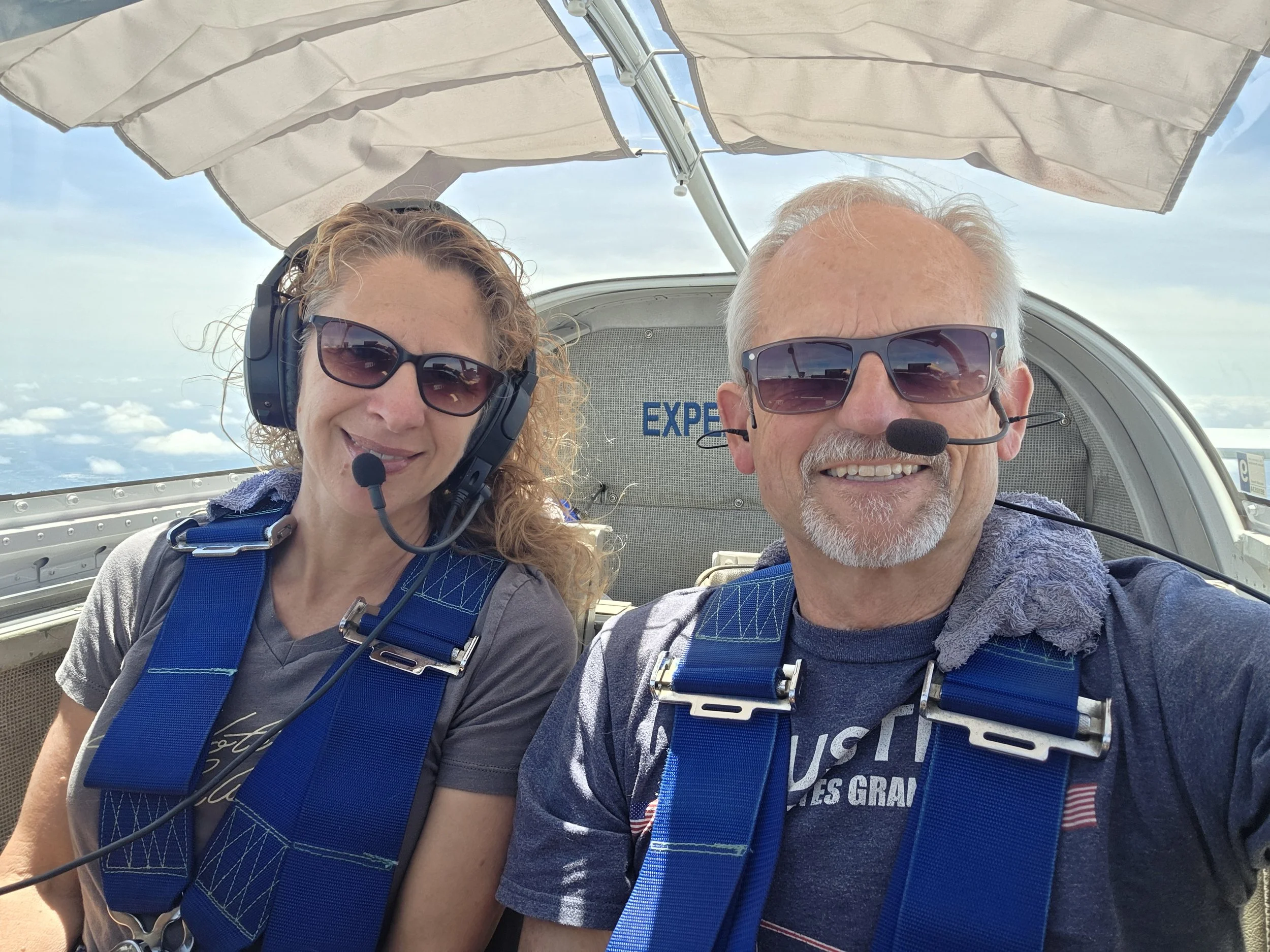
I picked up the phone and called my friend Craig.
Craig is a pilot, a surgeon, and one of the smartest people I know. I asked him what he thought about me getting my pilot's license.
Without hesitation, he told me that with my racing background and technical abilities, he thought I'd be a natural.
That was all I needed.
I hung up the phone and thought, Sure. Let's do this.
I'd wanted to do it my entire life. Why not now?
The next day, I started researching flight schools.
I drove across the street to the airport and visited one of the schools there, but it didn't quite have the quality I was looking for. Then I found Strike Hawk Aviation.
The guy running it was straightforward, no-nonsense, and had nice equipment. I liked his personality, and I liked his approach.
So I started taking lessons.
And when I say I started taking lessons, I mean I flew every opportunity I could get.
The only things limiting how often I flew were the weather and my instructor's schedule. If the weather was good and my instructor was available, I was flying.
It was November when I started.
My instructor's name was Bob. When we first met, he began asking questions to get an idea of how much I knew about airplanes. With all those years of building and flying models, I had accumulated quite a bit of knowledge.
Apparently, more than he expected.
At one point, he actually asked whether I was an FAA examiner checking him out.
I wasn't. I was just a guy who had loved airplanes since he was a kid.
The First Flight
We went through the basics. Bob handed me a checklist, and we preflighted the airplane. We pulled it out, started the engine, and he walked me through taxiing and performing the run-up to make sure everything was operating properly.
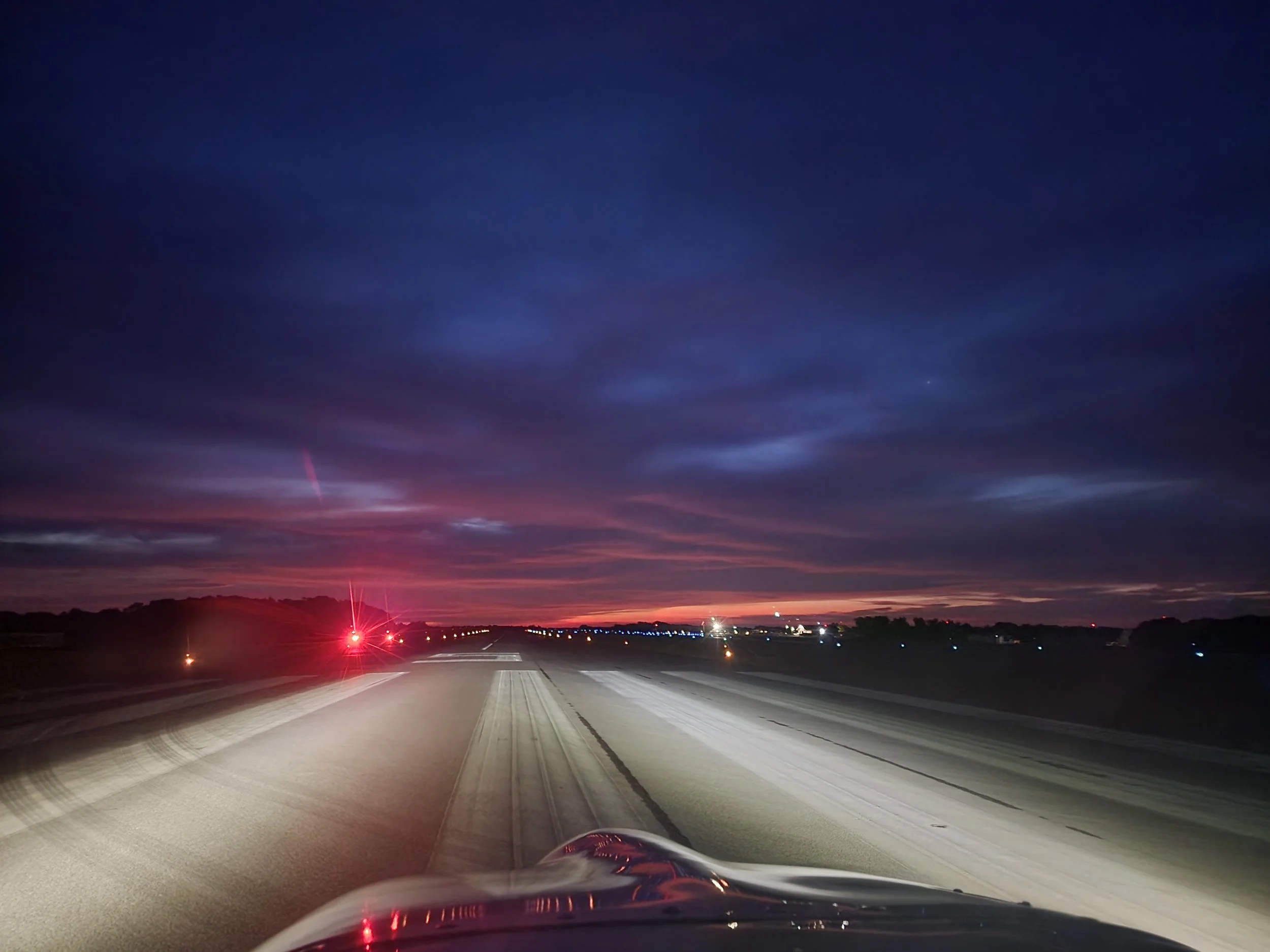
Then we lined up on the runway.
Bob had his hand on the controls and explained that he would tell me exactly what to do and when to do it, but I was going to fly the airplane.
I smoothly advanced the throttle to full power.
The airplane started rolling down the runway. I applied right rudder to maintain the centerline, called out my airspeeds, and checked that the engine instruments were in the green.
Then Bob told me to pull back on the yoke.
And just like that, we were flying.
I initially got the nose a little too high.
"All right, let's push it forward a little bit."
I lowered the nose, established the proper climb angle, and we continued upward.
We made our first left turn and stayed in the traffic pattern. At pattern altitude, I reduced the throttle, flew downwind, and he made the radio calls.
Then came another left turn onto base, followed by a turn onto final.
I reduced power, extended the flaps per instructions, and flew the airplane toward the runway, maintaining our descent.
As we got close to the ground, I began easing back on the yoke, slowing our descent.
We floated.
And floated.
And finally, the wheels touched the runway.
It was amazing.
We taxied back and did it again.
The second time, I had a better idea of what was expected of me. Maybe not a complete understanding, but enough that I wasn't trying to process everything for the very first time.
This time, we departed to the north and went out to play.
We made turns to the right and left, practiced stalls, worked on cockpit awareness and navigation, and eventually returned to the airport for another landing.
After that first day, saying I was hooked would have been a gross understatement.
The Day Bob Got Out
Training continued over the following weeks.
We practiced maintaining altitude, holding headings, flying around a point, takeoffs, landings, and all the other skills necessary to operate an airplane safely.
By mid-December, I had gotten comfortable with the routine.
One day, we went out and did our normal training. We returned to the airport and practiced a couple of takeoffs and landings.
After the third landing, we were preparing to go around again.
Bob said, "All right, let's do it again."
We taxied to the departure end of the runway.
Then he said, "Okay, this is going to be all you."
And he got out of the airplane.
My first solo had arrived.
I'd been waiting for it, anticipating it, and now that moment was here.
There are plenty of things we do in life for the first time that make us apprehensive. Some create a little fear. Others create a lot.
But flying an airplane by yourself adds another dimension.
There aren't many things we do for the first time where death is a possible consequence of getting it wrong.
I was sitting there in the airplane, alone, with the engine running.
There wasn't going to be anyone beside me to correct a mistake or take over the controls.
So I went back to what I knew.
My training.
I had the evidence of all those previous takeoffs and landings. I'd done this before. The only difference was that Bob wouldn't be sitting next to me.
And Bob had enough confidence in my abilities to get out of the airplane, reasonably assured that I wasn't going to kill myself or damage his airplane.
That was pretty good evidence, too.
I taxied onto the runway, lined up with the centerline, and made the appropriate radio calls.
I advanced the throttle.
Airspeed alive.
Engine instruments in the green.
Fifty knots.
Sixty knots.
Sixty-five knots.
I pulled back on the yoke.
The wheels left the ground.
I was flying an airplane.
By myself.
The nose wasn't too high. Everything felt good.
I was excited, but I was also focused. I still had a job to do.
Airspeed right around 100 knots. Climbing at 600 feet per minute. Full throttle. Mixture full rich.
At 800 feet above the ground, I began my crosswind turn, still climbing.
As I turned downwind, I approached the traffic pattern altitude of 1,200 feet above the ground and reduced the throttle.
No reason to go so fast.
I leveled off, maintained my altitude, and made my radio call.
I continued downwind, parallel to the runway, checking my position and airspeed.
When I reached the point abeam the runway numbers, I reduced power. The nose dropped slightly, and I added half flaps.
I turned onto base, made another radio call, and checked my airspeed.
Still safely above the minimum needed for the turn.
Descending at about 500 feet per minute.
Everything was looking good.
I checked for other traffic approaching the airport, then turned from base onto final.
There was the runway, straight ahead.
I lined up and maintained my approach speed of 75 knots, descending toward the numbers painted on the pavement.
As I got closer to the ground, I shifted my vision toward the far end of the runway. That helped me maintain alignment and judge my height above the surface.
I knew I had the runway made, so I pulled the power all the way back.
The airplane slowed to about 65 knots.
I continued descending.
At about five feet above the runway, I began pulling back on the yoke, reducing the rate of descent while holding the airplane just above the ground.
And then the wheels touched.
A little harder than I would have liked.
But I was on the ground.
I had just flown an airplane by myself.
All that excitement I'd been keeping contained while concentrating on flying came pouring out.
You couldn't have peeled the smile off my face with a crowbar.
I taxied back toward Bob, who was still sitting near the end of the runway.
He called me on the radio.
"Looked great. Let's do it again."
I was more than happy to oblige.
I taxied back, made my calls, took off, flew around the pattern, and landed again.
This landing was definitely better.
I taxied back for another.
Bob told me, "All right, one more time."
Up I went.
This time, I rounded out a little high and bounced the airplane onto the runway harder than I wanted.
Bob came over the radio.
"All right, that's enough for today. Pull it over to the gas pumps."
Fair enough.
I taxied over to the pumps, shut down the airplane, and got out.
Bob was still walking back while I started putting fuel in the airplane.
I can't adequately describe the feeling I had standing there.
Euphoria is probably the closest word.
I'd just done something I'd dreamed about since I was a little kid.
And I'd done it at 54 years old.
The Shirt
After fueling the airplane, Bob and I climbed back in and returned it to the hangar.
Then he pulled out a pair of scissors.
He cut the back out of my shirt.
It's an old aviation tradition that goes back to the days of open-cockpit training airplanes, when the instructor sat behind the student.
Without radios or headsets, instructors sometimes got a student's attention by grabbing and pulling on the back of their shirt.
Once the student soloed, the instructor no longer needed to do that.
So they cut the back out of the shirt.
I still have mine hanging on the wall of my hangar.
It's a reminder of that day, but more than that, it's a reminder of what happens when you finally decide to do something you've been thinking about for years.
A Different View of the World
I went from my first flight to earning my private pilot's license in about six months.
It probably would have been quicker, but winter weather delayed my solo cross-country flights.
When I started, I thought I was learning to operate an airplane.
And I was.
But what I hadn't anticipated was how much flying would expand my world.
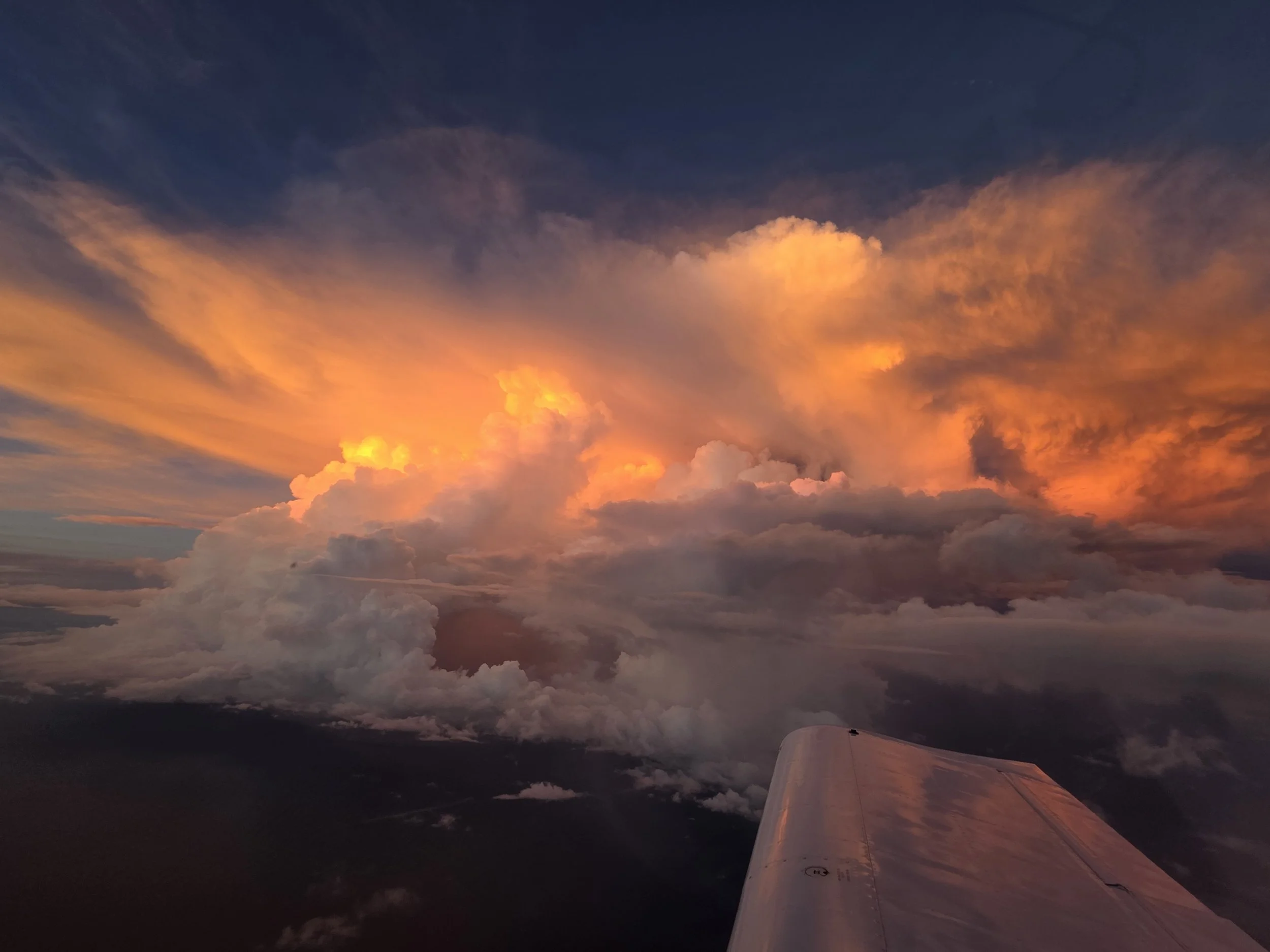
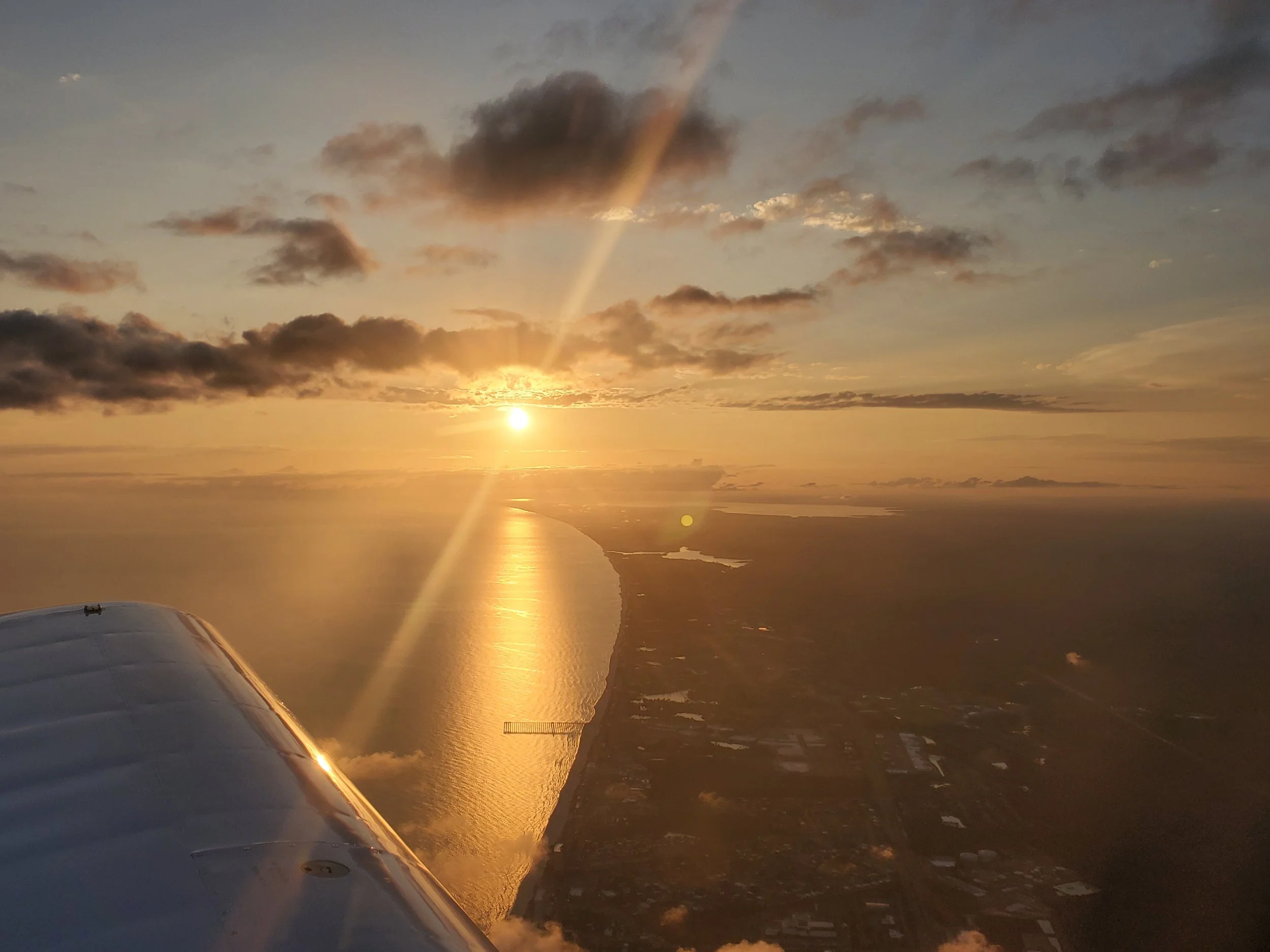
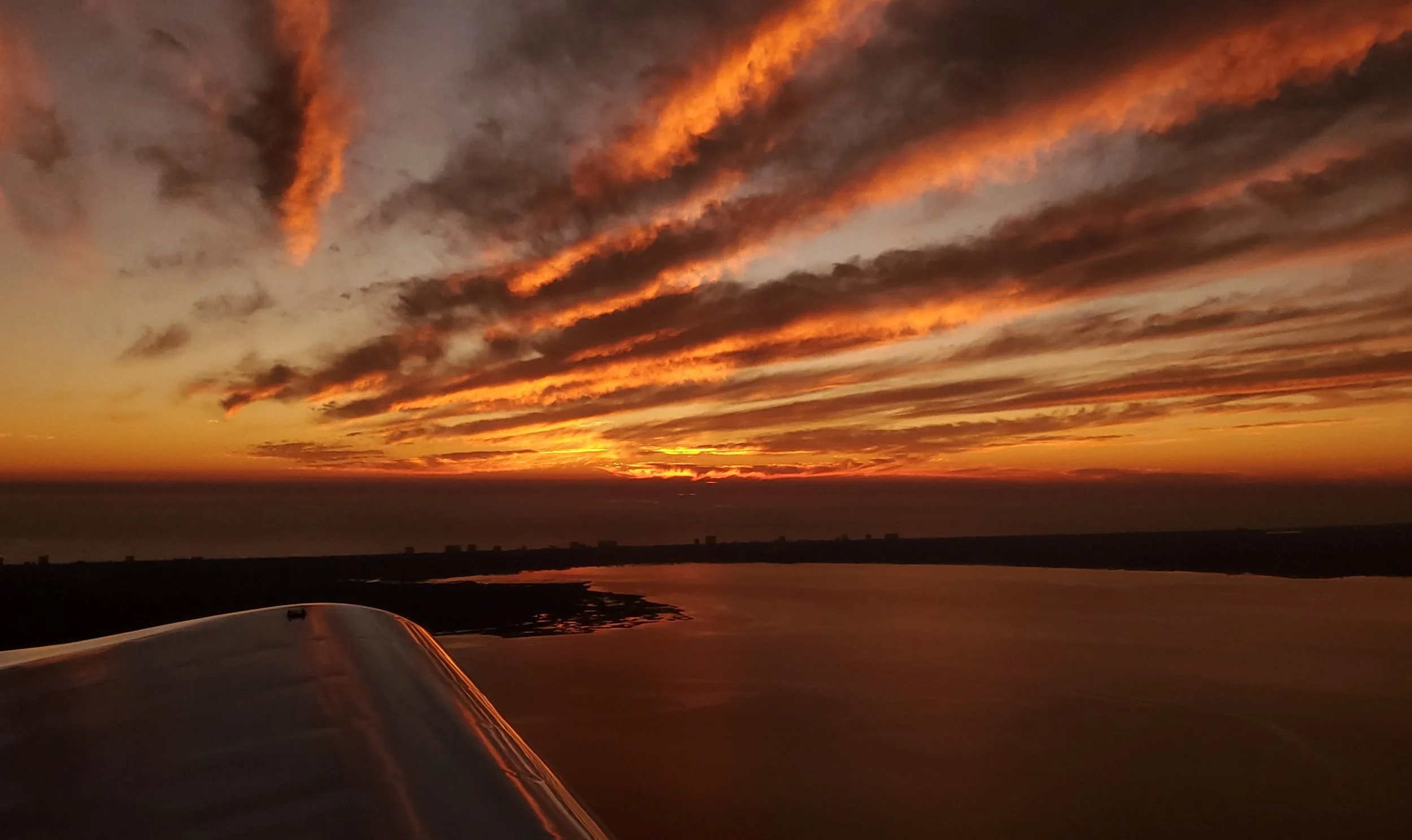
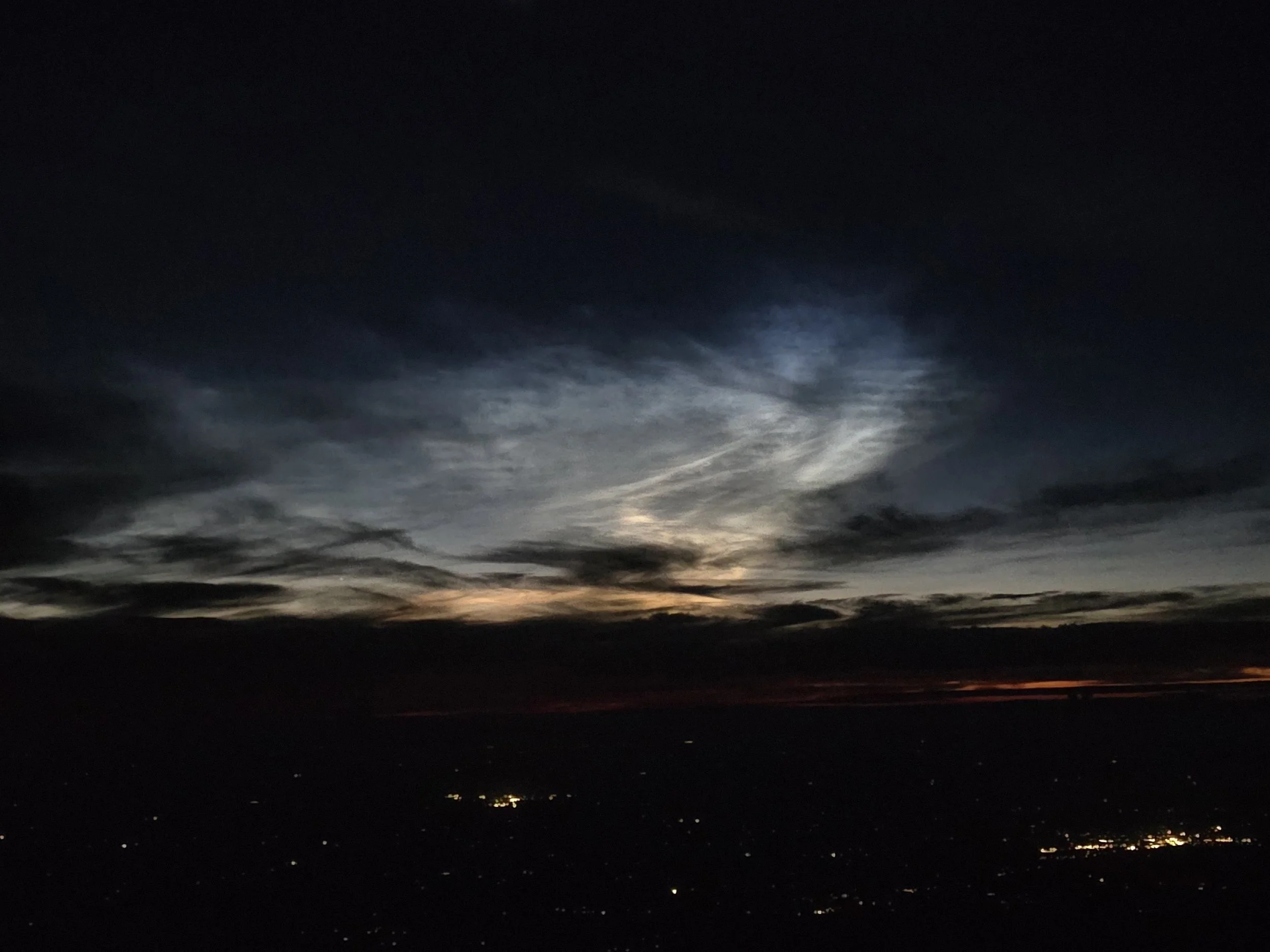
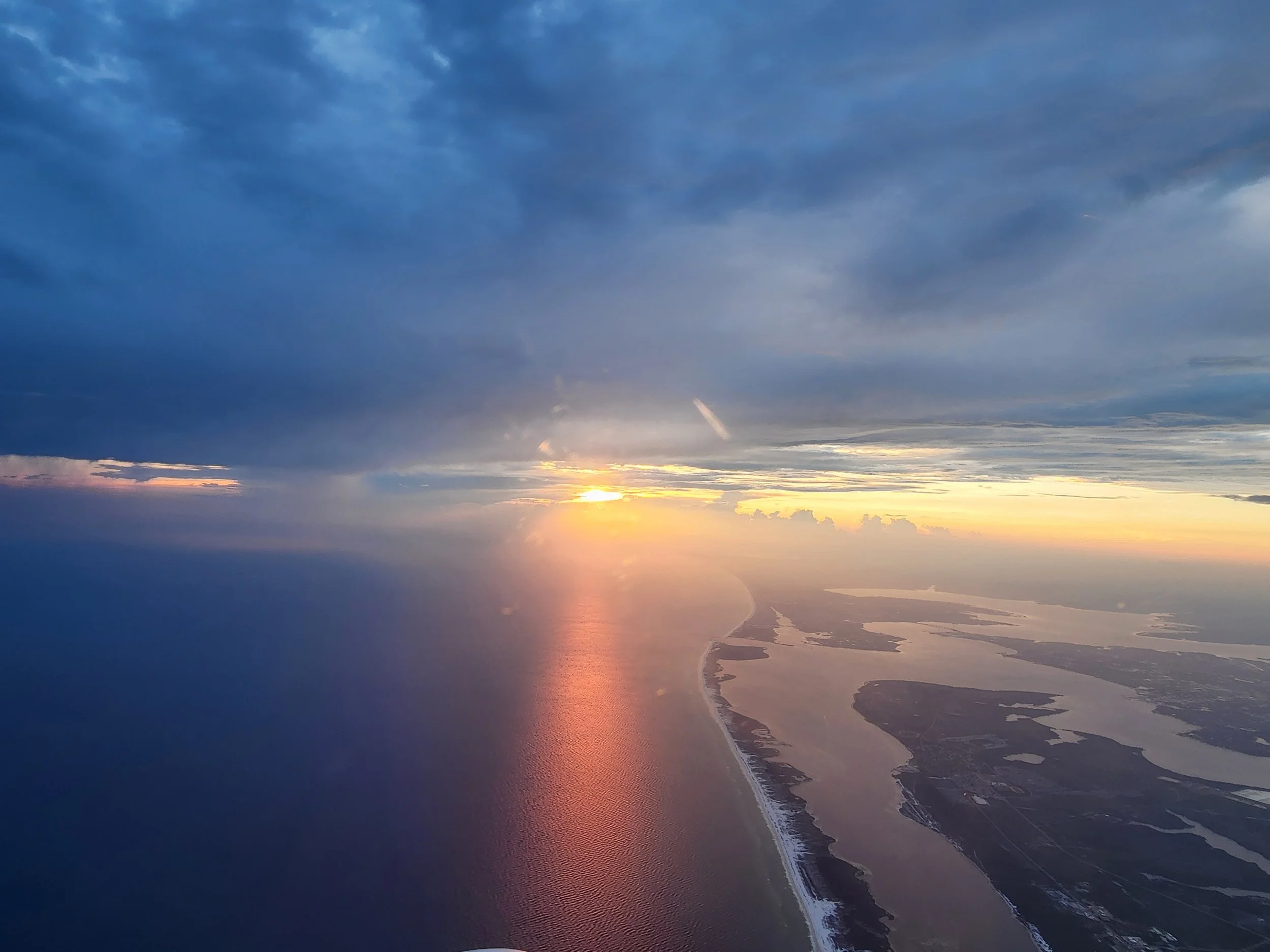
There's something about being up in the air that's difficult to describe to someone who hasn't experienced it.
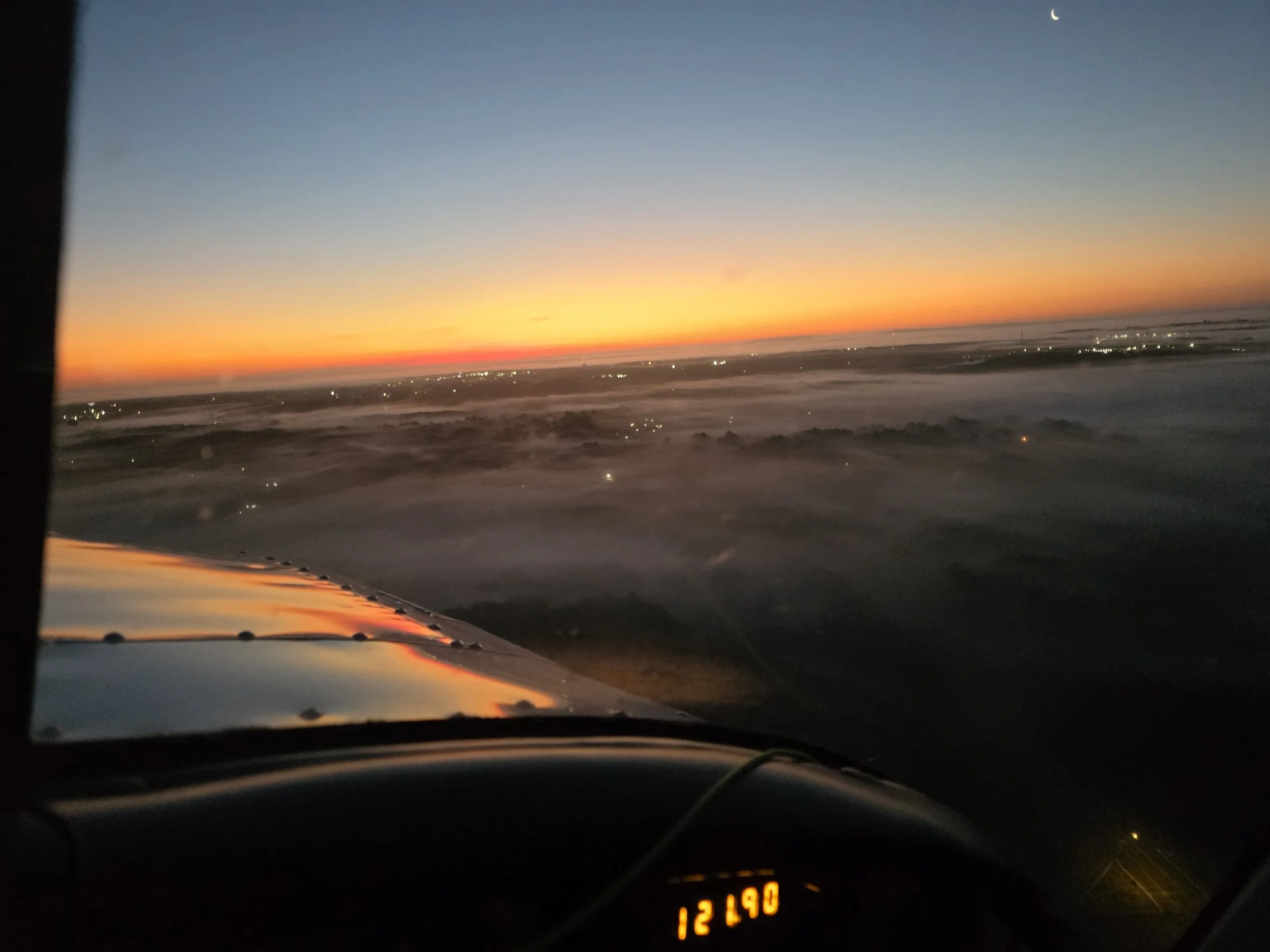
It's peaceful.
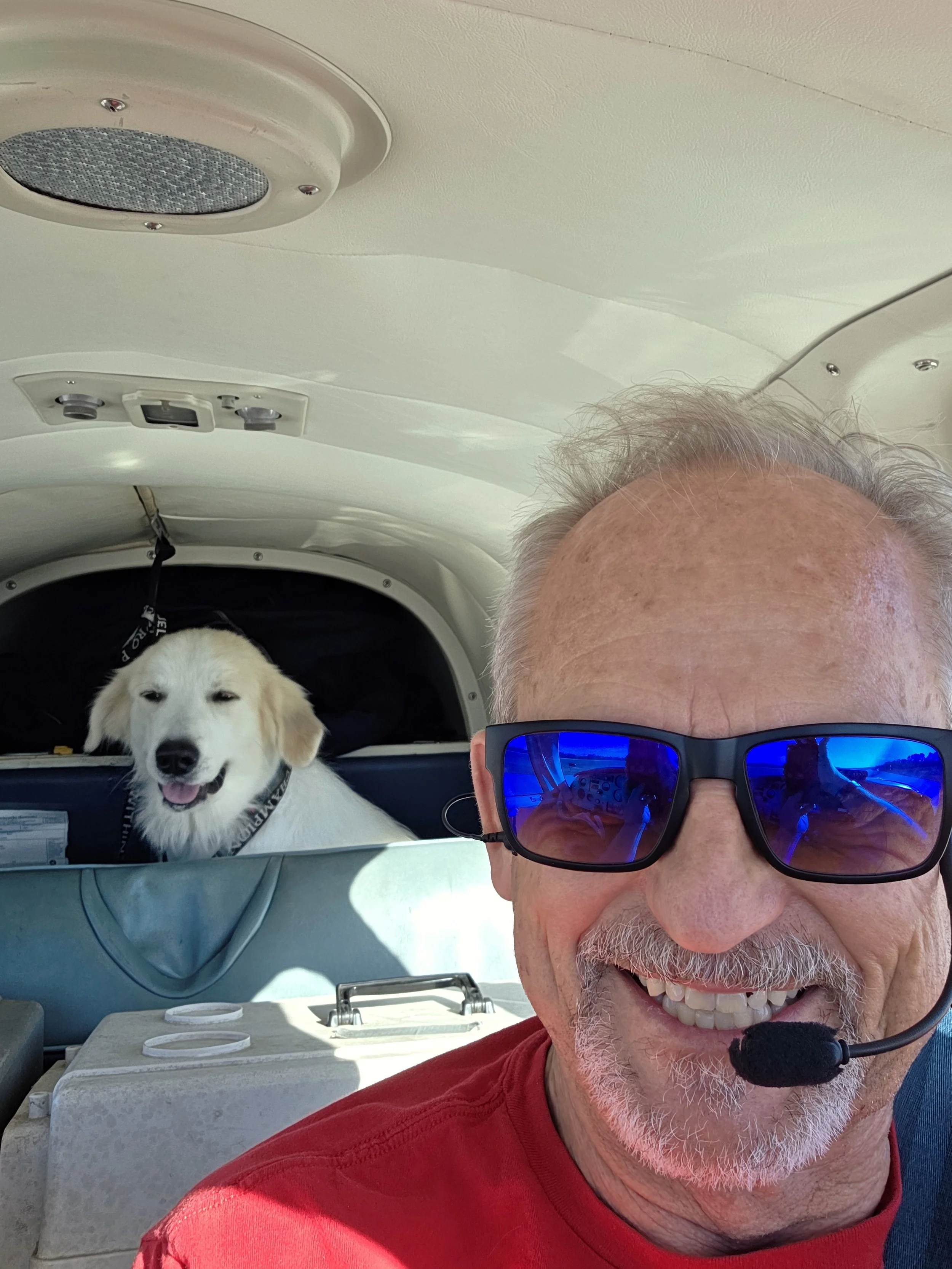
There's a sense of freedom and a kind of solitude that I don't experience in many other places.
It's a place for introspection.
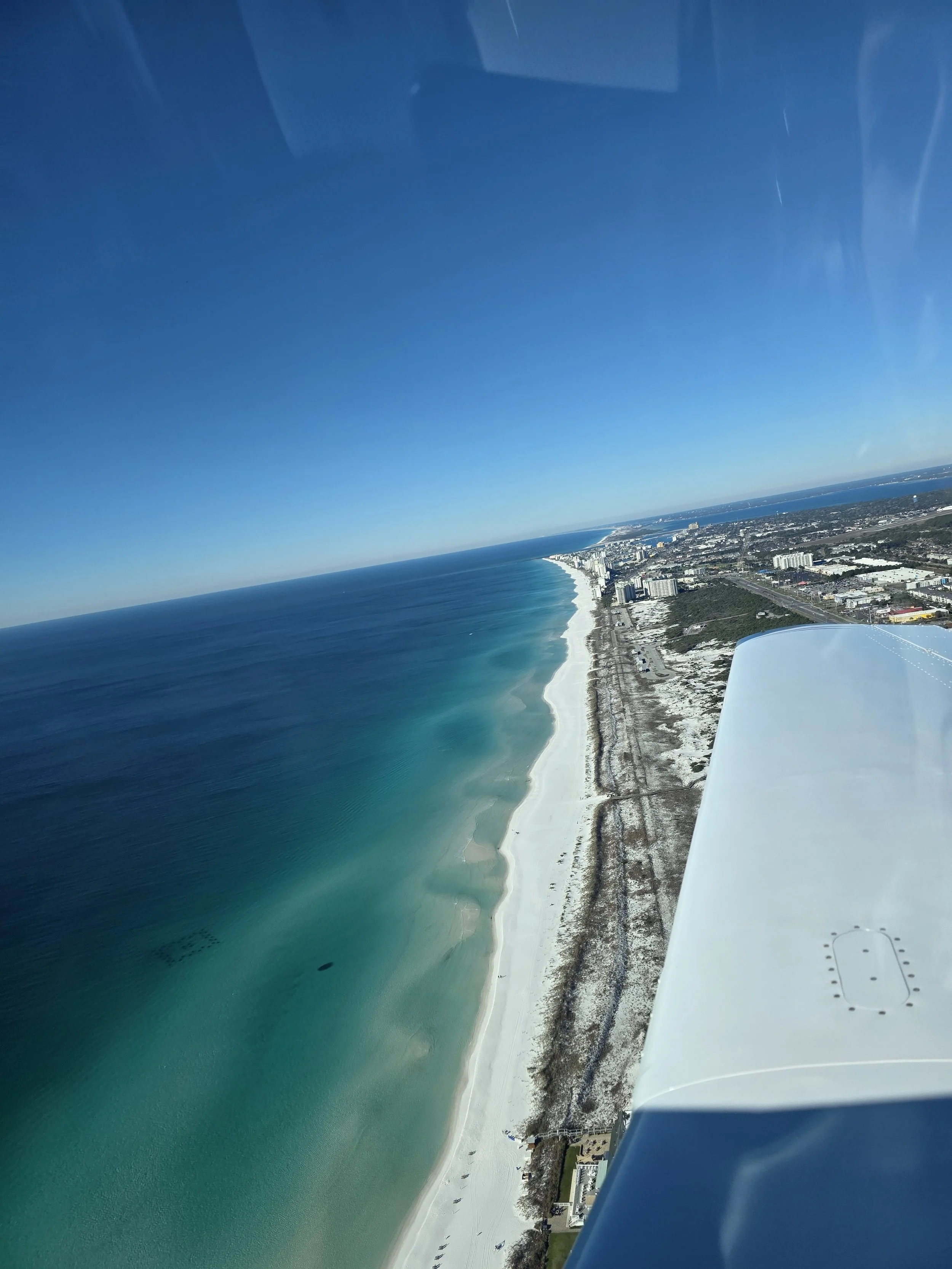
A place where I can look down at the world, take in the landscape, and be amazed by something different every time I fly.
And it's a place where I find myself feeling an enormous amount of gratitude.
Not just for the airplane or the privilege of flying it, but for how my life has unfolded.
All the shit I've gone through.
All the great days.
All the difficult ones.
All the decisions I've made and the things I've learned along the way.
They've all contributed to the person sitting in that cockpit today.
There are certainly things I would do differently with the information I have now. But I also recognize that every one of those experiences gave me something I didn't have before.
Knowledge. Perspective. Confidence. The ability to handle things I once might not have been able to handle.
Flying has become one of the places where I can appreciate all of that.
I started because I wanted to learn how to fly an airplane.
What I found was something much more meaningful than I expected.
And to think, it all started because I was standing on the roof of my shop, looked across the street at an airport, and decided to make a phone call.
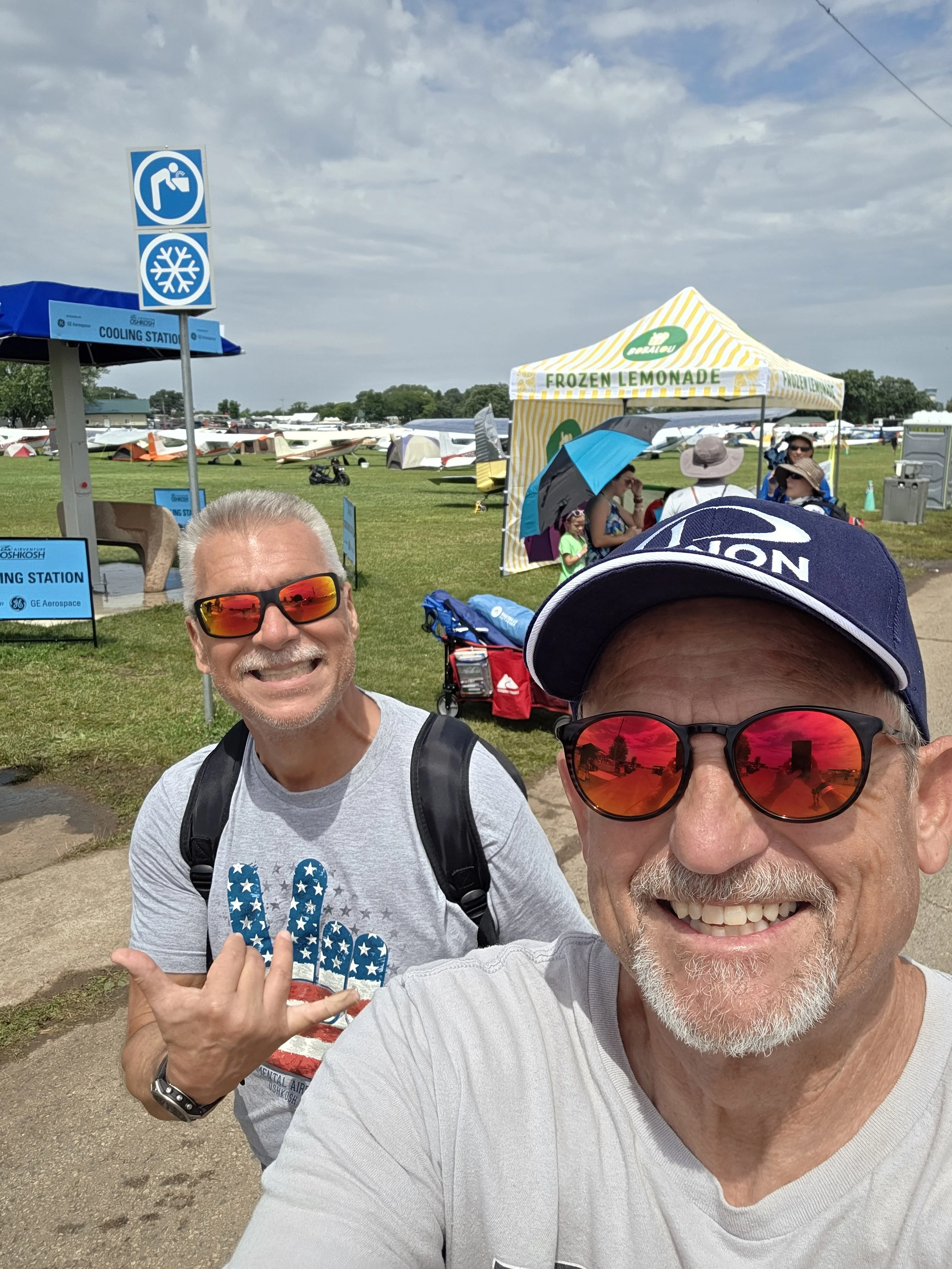
Craig